
Stage Four, and why it does not arrive as relief.
Nobody announces a season change. There is no last day of the worst part, no notification, nothing marking the line between what you have been living and whatever comes next. You find out afterward, if you find out at all. Mine turned and it took me about a year to notice.
We moved from Europe to Central America and I want to be honest about what that accomplished, which at first was nothing. I brought all of it with me. Same depression, same problems, new house. What was different here was the culture. Hiring help is ordinary in this part of the world in a way it never was for us in the States or in Europe, and that is what actually changed things.
So we hired a nanny. She was with the children about eight hours a day. She was not a wonderful nanny and I was not a good mother at that point, but the children were safe and I knew where they were without me having to keep a constant eye on them.
And I went to bed.
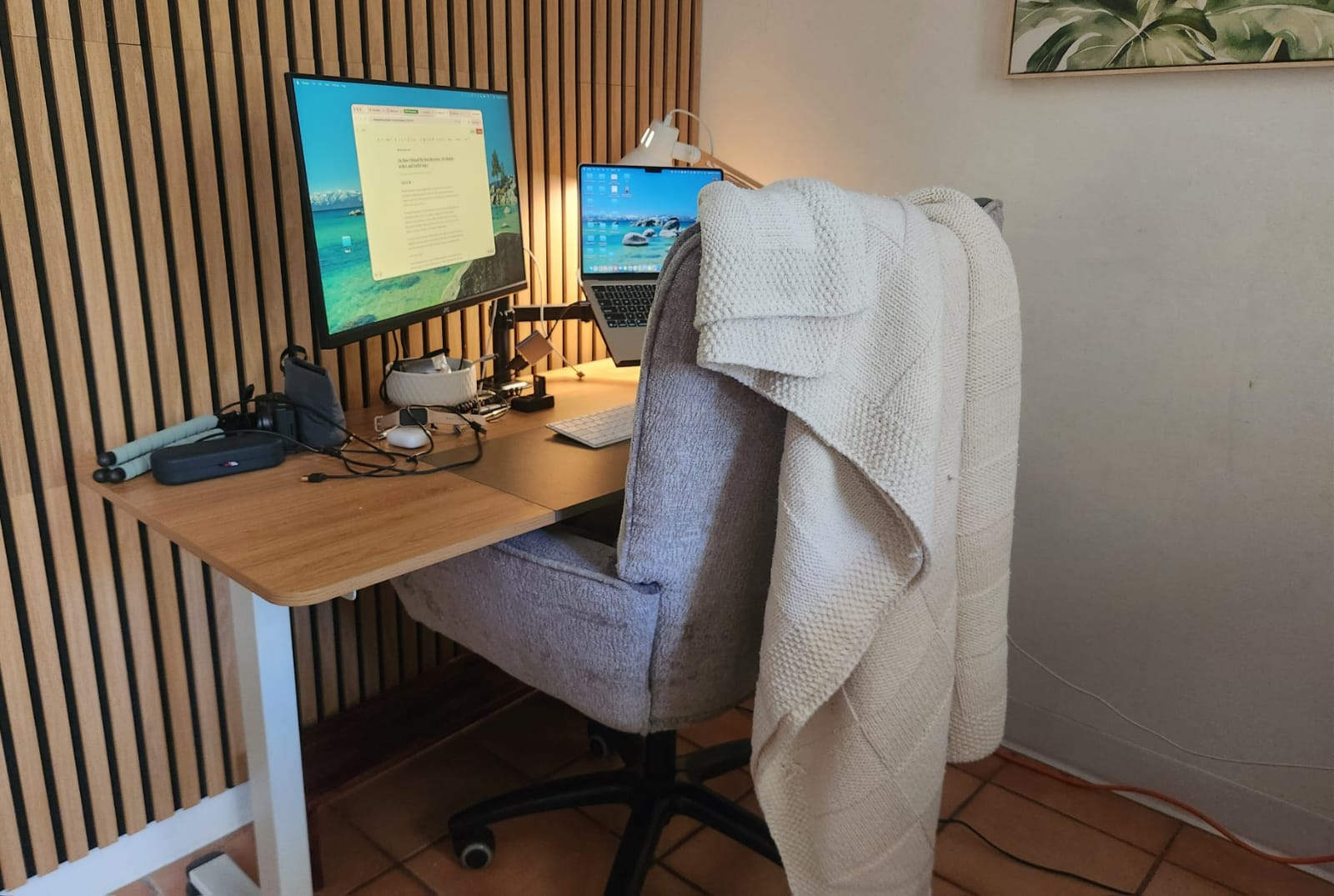
I am not being figurative. I spent six months sleeping in, resting, and producing nothing. I knitted a blanket, which was the first thing I had handmade in 10 years. Beyond that, nothing.
I was ashamed of it. Six months of a woman lying in a bedroom while somebody else handled her kids. I tried to do more and I could not.
Looking back I cannot see how it could have gone otherwise, and there is research that explains why. There is a documented pattern called the let-down effect. People do not collapse during the stressful stretch. They collapse afterward, once the pressure comes off. Cortisol drops, the immune system shifts, dormant infections reactivate, mood falls. The body waits until it is safe before it falls apart.
So the six months in bed were not what delayed my recovery. They were the recovery. The crash was the season changing. I simply could not read it as anything except failure, because it looked exactly like the thing I had been trained to be ashamed of.
When the nanny eventually left, I was certain I would not cope. Then I did, without breaking. The sleeping had given me back enough of a brain to manage it.
The awareness came back slowly. It seeped in gradually enough that I could not name the day it started.
And what came with it was not pleasant.
Once I could think clearly enough to look at my own life, what I found was that I had stopped believing I was worth anything. I felt I lost my self-worth as a human. That all I did was useless and endless. I brought nothing to the table. I earned no money. I was a bad mother and a bad wife and I had no friends. That was despair talking. As far as I was concerned it was just the situation, accurately described.
And then I got angry.
That anger is the part I want to talk to you about, because I have come to think it is the actual signal.
Look at that list again. No money. Bad mother. Bad wife. Bad friend. Every item on it measures what I was producing for somebody else. There is nothing on it about me. I had been assessing my own worth entirely by output, for so long that it had not occurred to me there was another way to do it.
A year later I know a lot more about what was actually happening to me, and I have been building it into a method. I call it Radical Self-Prioritization, and seeing the wiring is where it starts.
Try it on yourself, from the comfort of your own home, as the ad would say. Write down what you currently think is wrong with you, and do not tidy it up while you write. Then go back through and count how many of those things are about what you provide for other people rather than about your personality.
When I did that, there was nothing left over. Every item on my list was about what I produced for somebody else. I had no other way of measuring myself and had not had one for years. That habit of measuring is the wiring. It is often “installed” during upbringing.
But if you are curious, it is not a personality flaw and it has a name. Psychologists call it unmitigated communion, a focus on others to the exclusion of yourself. There are two separate measures involved. One is for caring about other people. The other is for caring about them at your own expense. People score differently on each, and it is the second one that predicts depression and poor health.
I did not have any of that language at the time. What I had was clarity, and it arrived ugly.
Clarity comes as shame first and then as anger, and the anger is the part worth understanding, because it is the thing most likely to convince you that you are getting worse.
Anger is the body’s defence emotion. It fires when something has been wronged. Your nervous system registers that damage was done. It cannot tell you by what. It has no way of knowing whether this was one enormous thing, or several thousand ordinary days that added up. It only knows the damage is real, so it produces anger to claim something back.
Which means it arrives with no target and takes whatever is nearest. You will be furious at doctors who were not there when you needed them. At your husband. At your children, and then at yourself for that. And underneath all of it, at yourself, because clarity shows you your own part as well.
If you are furious, you are further along than you were when you felt nothing at all.
I still have the blanket. It is not a very good blanket. It was the first thing I had made with it not being “for someone” in ten years. I made it because I really enjoy knitting.
P.S. Seeing the wiring is the first part of Radical Self-Prioritization. What you do with the anger once it arrives is the rest of it, and that is what I have been building. I will be writing it out here as it goes.
Natalya
If you’d like my letters in your inbox, and to be one of the first to read them, you can join here.
Related from the blogOn narcissistic mothers & postpartum depression · Radical Self-Prioritization