
Why the Dish.
When someone in a family gets sick, the casseroles come. Neighbors show up. People sit with you. They don’t know what to say so they bring food, and the food means: I know something happened here. I know you are in pain. I am acknowledging it.
I have been a mother for over a decade. Two of my three children are severely autistic. And in all of that time — through the diagnoses, the therapies, the waiting lists, the crisis calls — not one casserole arrived.
Not because anyone was cruel. Because they couldn’t see it.
There was no funeral. There was no moment the neighbors could point to and say — there, that’s when it happened, that’s when we should show up. What happened to me didn’t happen in a day. It happened in every day after.
I Was Told to “Just Love Them”
And a lot of those days were spent fighting the people who were supposed to help. I knew what autism was. The problem was never that I needed it explained to me. The problem was a medical system that looked at my children in real physical pain and told me to love them the way they are. No blood work. No investigation. No attempt to find out why they were suffering — just the instruction to accept it and be grateful. For years, that was the whole of what medicine offered us.
It wasn’t until we moved to Europe that anyone actually looked. We got a complete diagnosis. We found the underlying issues driving the symptoms, and we were able to take away a level of physical pain my children had been living in the entire time — pain that everyone back home had told me to simply love them through.
So I know what it costs when the people with the power to help decide that acceptance is a substitute for care.
What Died Was the Future
What died in all of this was the future. Not dramatically, not all at once — in pieces, over years. The version of them I had imagined. The version of myself. The life that was going to look like something I could explain to another person without watching their face rearrange itself into an expression I have learned to anticipate — the one that is trying to find the right thing to say and cannot.
Invisible Grief Doesn’t Get Casseroles
The grief was real. It was also completely invisible. Invisible grief does not get casseroles. It gets advice. It gets perspective. It gets people telling you that everything happens for a reason, that God only gives this to special parents, that someone always has it worse. It gets the cruelty of being handed a bumper sticker when what you needed was someone to sit down.
So nobody sat down. And I kept going, the way you keep going when stopping is not an option and the work is never finished and the nervous system that was built to recover between crises never gets the chance, because there is no between. There is only the next thing, and the management of it, and the performance of being okay — because the truth is too large and too uncomfortable for most people to be in the same room with.
For the People Already In It
I am not writing this for the people who cannot be in the room with it.
I am writing this for the people who are already in it.
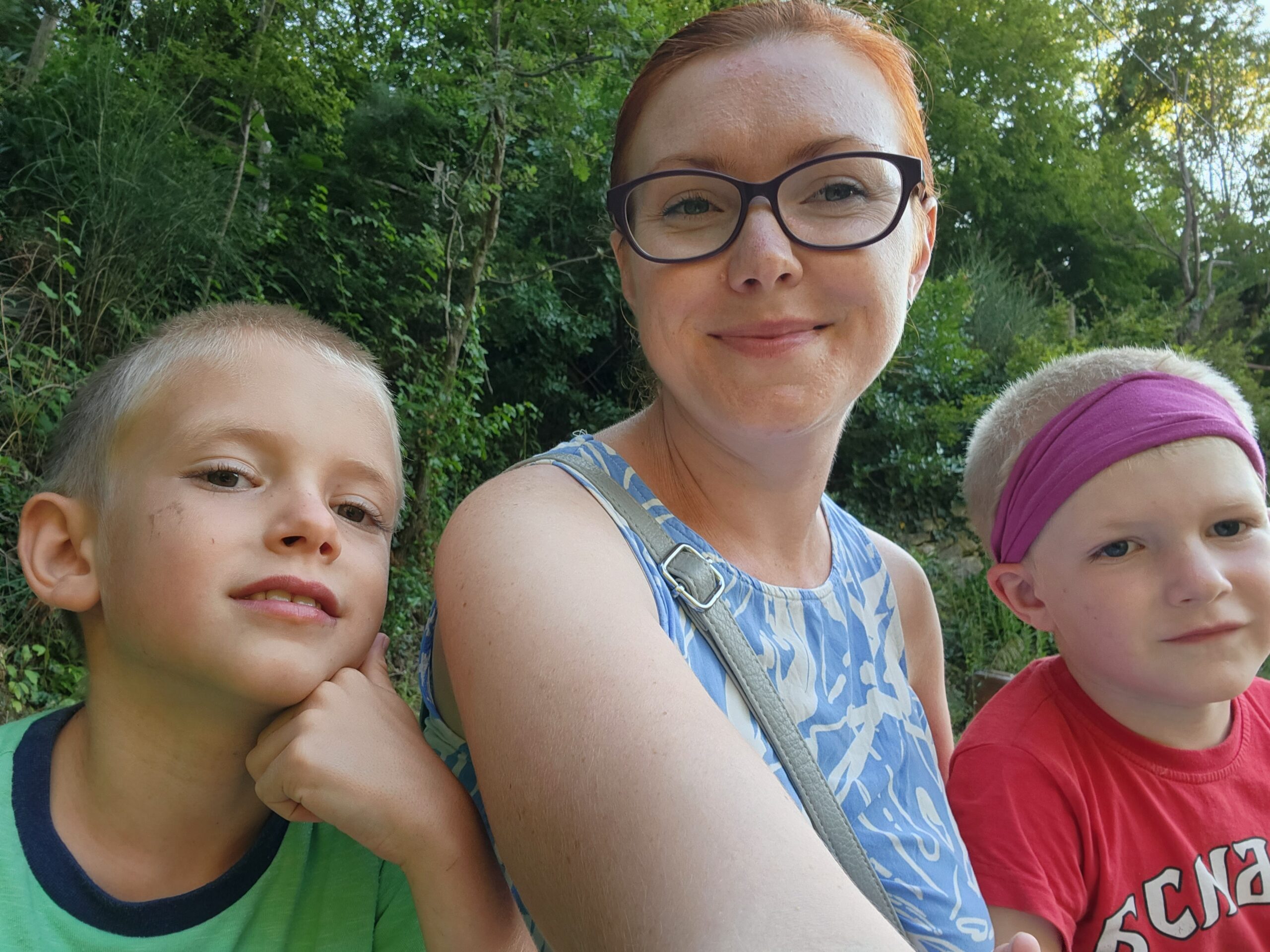
My name is Natalya. I am a mother, an author, and someone who spent years being told — in a hundred indirect ways — that what I was going through did not count as suffering, because my children were alive and I should be grateful and other people had it harder. I believed it for longer than I should have. I felt guilty for being depressed, guilty for being angry, guilty for grieving something I couldn’t even name out loud because I didn’t have the language for it yet.
And then I found the research.
Not the parenting books. Not the caregiver wellness content. The actual science — what sustained, unrelenting caregiving stress does to the human body and brain. The cortisol that stops regulating. The dopamine system that goes quiet. The identity that dissolves so gradually you don’t notice until you reach for yourself one day and find you are not quite there. The PTSD that develops not from one event but from years of high-demand, no-exit stress with no support. The depression that is not a character flaw. The grief that is not ingratitude. The exhaustion that is not weakness.
It is documented. All of it. It has been documented for years. And almost none of the people living inside it have ever been told.
That is what No Casserole is.
Not a support group. Not a wellness platform. Not inspiration. Just the science, handed to you straight, without being softened first so you can swallow it. Without anyone requiring you to prove how much you love your kids before you are allowed to say what it has cost you.
Natalya
If you’d like my letters in your inbox, and to be one of the first to read them, you can join here.
Related from the blogThe Day Everyone Stopped Calling · PTSD in Caregiving Parents · What “let me know if you need anything” actually means