
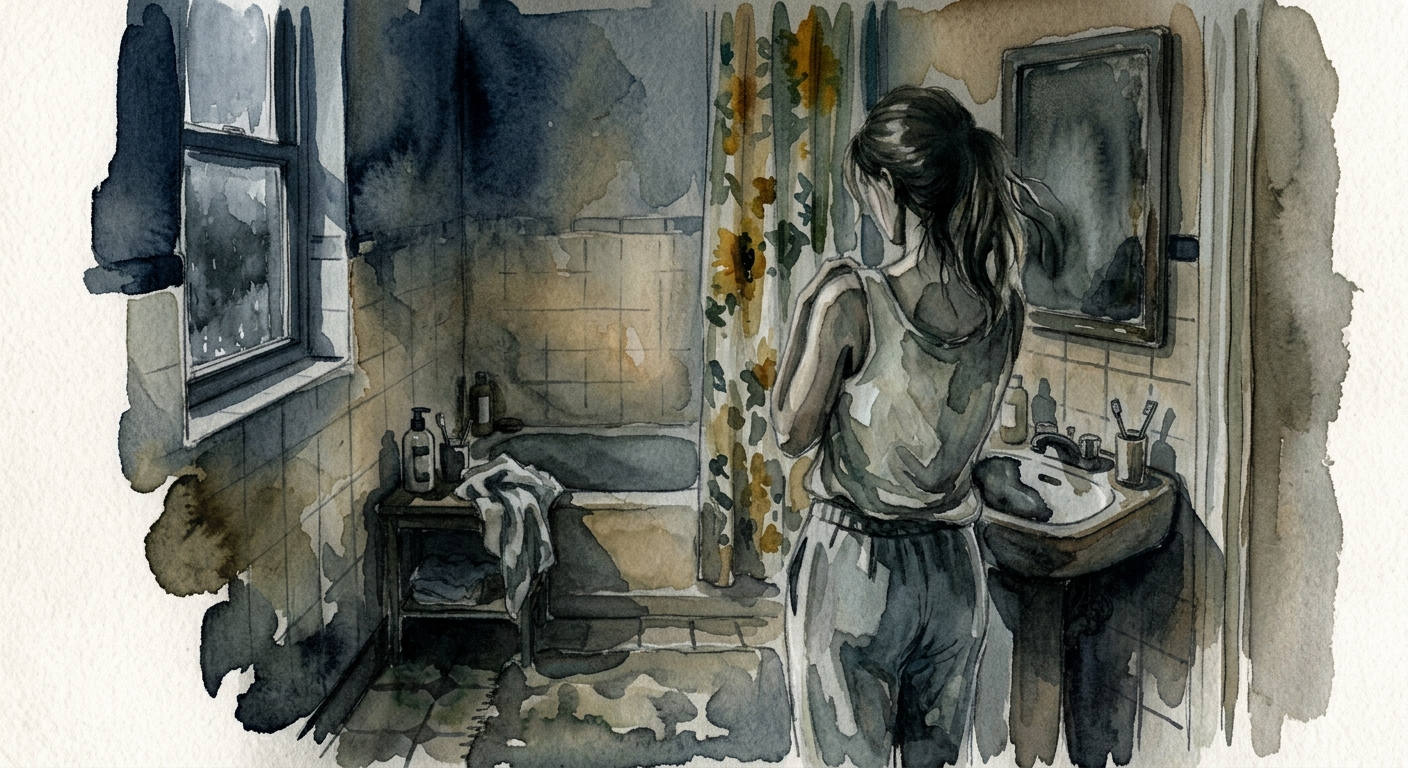
There was a t-shirt I kept wearing.
It had holes in it. Every time I put it on I told myself it was the last time. Then I washed it and put it on again.
My husband noticed. I don’t remember exactly what he said, but I remember the gist of it. He was saying that I wasn’t taking care of myself. I remember thinking that taking care of myself had become a concept that no longer applied to my life. I had stopped exercising. I had gained weight. I was wearing whatever required the least decision-making, past the point where it deserved to be worn. Something in the logic of caring for myself had shifted, and I couldn’t locate what.
Here is what had shifted.
When I was with my sons in public, it did not matter what I looked like. Their presence — the noise, the chaos, the way Simeon would drop to the ground and roll on the pavement, when they would try hit their heads on the ground or walls, or bite strangers — their presence overrode mine. And I was right there with them, down and dirty, padding and protecting. Doctors looked at them and made assumptions about me. Teachers made assumptions. Strangers in grocery stores made assumptions. Whatever I had shown up as that day was irrelevant, because I was being read through them. By association, I was what they looked like.
So the logic that said it matters how you present yourself started to malfunction. I could spend twenty minutes getting dressed or I could throw on the t-shirt with holes. The outcome, in terms of how I was perceived and treated, was going to be approximately the same. Because I was not being perceived as a person. I was being perceived as “that weird kid’s mom”, and “that weird kid’s mom” was the woman whose kids did those things, and nothing I wore was going to change that read.
What I didn’t understand, while this was happening, was that I wasn’t just responding to external perception. I was slowly handing myself over to it. The logic that said it doesn’t matter how I look was doing something else underneath. It was also saying I don’t matter how I look. And then, eventually, just: I don’t matter.
The research on caregiver identity loss calls this role engulfment. The caregiving role consuming the person inside it until the two become indistinguishable. Personal needs stop being attended to. The self erodes over years, while everything you have keeps going toward someone else.
The tricky part is that this erosion can feel completely rational while it is happening. The t-shirt, the weight, making their needs the priority — each one was a logical response to a life where how I looked was being overridden by forces I could not control. It did not feel like falling apart. It felt like conclusions drawn from evidence.
The conclusions were wrong about what the evidence meant. Strangers not seeing me did not mean I was not there. Doctors making assumptions did not make me those assumptions. Being overridden in public did not mean I had stopped mattering.
It meant I had stopped insisting that I did.
What the research says about identity loss in caregiving parents, and what the way back actually looks like → Role Engulfment: When Caregiving Takes Your Name.
Next week: the marriage that became a two-person care operation — and the research on what sustained caregiving stress does to a relationship when neither person has anything left.
If you’d like my letters in your inbox, and to be one of the first to read them, you can join here.
Related from the blogWhen Caregiving Takes Your Name · You’re Not Who You Were Before · The day I became the update