
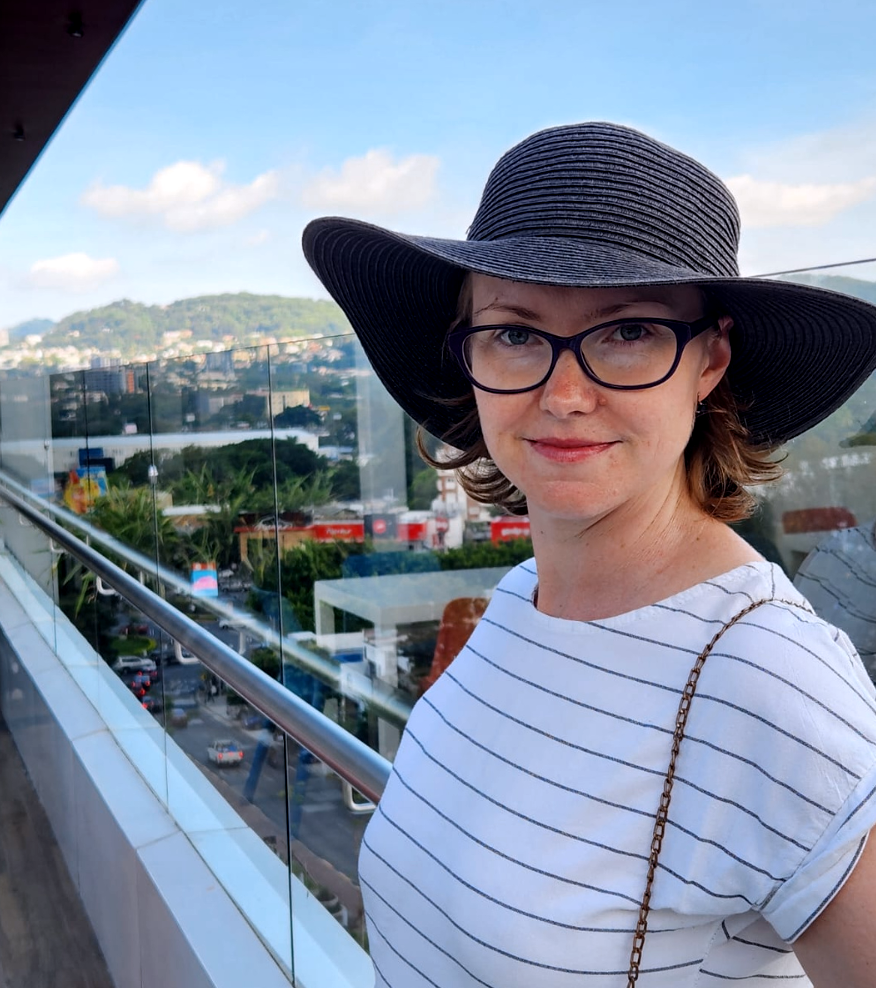
For over a decade, every conversation started the same way — someone would call, or stop me in a parking lot, or message, and the first question was always about my kids. How are they doing, did the therapy help, how are the behaviors. I would answer completely, accurately, with the full update, and then there would be a small silence and sometimes a “that must be so hard” aimed somewhere in my general vicinity, and then it would end. In over a decade I can count on one hand the number of times someone asked about me — not the caregiver me, not the functional-enough-to-keep-going me, but the actual person underneath the update. It almost felt questionable to have personal interests and do something that was not directly tied to my children’s wellbeing. The autism was so big in everything our family did, that it was questionable to be interested in anything that was not related to it. It was constant blaring emergency that left no options for me as an individuum.
And the thing is, I understood it. I understood why. They are the ones with the diagnoses. They are the ones whose progress is visible, whose struggles are concrete, whose needs are legible to people who don’t live inside this. I was the structure for all of it.
What I got, occasionally, was the advice.
You need to take care of yourself so you can take care of them.
I have heard that sentence more times than I can count. It was meant kindly, I know. But I want to be precise about what it actually says. It says: your wellbeing is instrumentally valuable. It matters as far as it keeps the machine running. Take care of yourself — not because you are a person who deserves care, but because you are a resource that needs maintenance so it can continue to function in service of someone else.
And I ran on that logic for years. I justified my own needs only when I could connect them to my sons’ outcomes. Sleep matters because exhausted parents make mistakes. Therapy matters because a dysregulated mother dysregulates her children. Eating, resting, asking for help — all of it filtered through the same question: does this make me more useful to them. If the answer was unclear, the need got set aside. Years of that. Years I cannot get back.
The realization started to creep in when I was running so low on sleep and self-care that I seriously started questioning my worth as a human being. I felt that nothing I did was enough and at the same time had no value. I felt undeserving of being seen, appreciated, or cared for. I was there to support, clean up and make others comfortable.
And that made me kind of angry.
The moment I named that — the moment I said out loud, to myself, that I was allowed to need things for reasons that had nothing to do with my usefulness to anyone else — was not a turning point in a tidy narrative sense. It did not immediately change anything. But it was the first accurate thought I’d had about myself in a long time. And accurate is where everything else eventually starts.
What I did with that realization — the actual, practical, research-backed version of what it means to exist as a person and not a function — is in this week’s Method piece I will be sharing on Tuesday.
Next week I would like to write to you about Identity Loss: “Losing your name. Being “his mom” to every doctor, teacher, and therapist.”
Natalya
If you’d like my letters in your inbox, and to be one of the first to read them, you can join here.
Related from the blogThe Day Everyone Stopped Calling · When Caregiving Takes Your Name · What No Casserole means